
Album Review: Honesty Doesn’t Pay by Supermarket Parking Lot
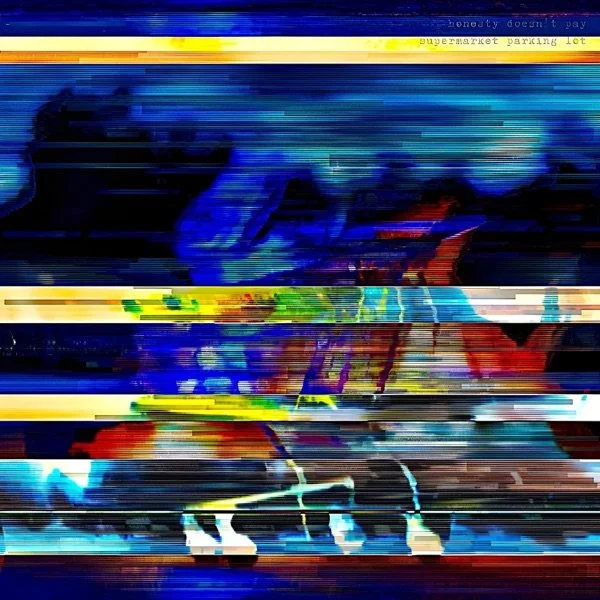
In a world of short-form content and short attention spans, a song over 5 minutes might seem daunting. Hell, an album that spans over an hour rather than the typical 30-40 minutes may seem too much to the average listener. Artist Supermarket Parking Lot proves that there is nothing to be scared of. His debut album, Honesty Doesn’t Pay, reminds us of the lost art of rock symphonies and extends the boundaries of what a song is supposed to sound like.
Supermarket Parking Lot is an art rock project spearheaded by singer/songwriter/pianist Marco Tewlow, a New York City-based artist. Inspired by bands like King Crimson, Tool, Queens of the Stone Age, Radiohead, and The Smashing Pumpkins, Tewlow creates masterpieces about isolation, love, anxious heartbreak, and existential rage. His 65-minute debut taps into these themes and draws on influences accumulated during his time in Boston for college, creating a unique sound fearlessly.
Released on April 30th 2026, Honesty Doesn’t Pay is unexpected — with more than half the songs extending over the five-minute mark, you will truly be surprised by the directions this project takes. The intricacies of balancing chaotic overdriven guitars mixed in with softer, quieter moments of piano and bass will keep you captivated. Inspirations of and similarities to 80s art rock and post-punk, along with psychedelic tendencies, are strongly apparent throughout the work. It’s exciting, fun, yet introspective. Interesting melodies, dramatic mood swings, and experimentation will fully immerse you in Supermarket Parking Lot’s soundscape.
A noisy, ambient mess of guitars and drums leads you out of this world in the first song, “Forest Fires.” It’s mystical, as the bass line and guitar riff drive the song throughout. All of a sudden, the Muse-like guitar riffs stop, and the lyrics come in with piano. Tewlow has a commanding voice that immediately captures attention. This builds to a punchy chorus that will be stuck in your head for days. Then it transitions to the song, “A Favor (The Cell),” which begins with a strong bassline. It’s almost futuristic, apocalyptic-sounding psychedelia. Each layer of instrumentation is carefully built on top of one another, fully immersing the listener in the soundscape and world Tewlow is creating. There are beautiful and interesting vocals in this one, with overlapping harmonies and possibly the strongest vocal performance of the album during the bridge. At one point, the guitars are delayed and have a call-and-response between the left and right stereo channels. It ends beautifully with a slow outro before it gets loud and anarchic again.
Next is “Phantom Vibration,” which starts almost like an '80s power ballad, with piano and bass. This tension between the instruments perfectly illustrates the tension sung about in the lyrics: two people who want each other but are not quite sure how to begin the connection. Once the fuzzy guitars are added to the piano melody, they create a satisfying yet ghostly feeling. There’s a very stressed, erratic buildup to a soft bridge, then a bounce back to an explosive outro, proving the unpredictability of this project. The track perfectly transitions into the shortest song, at just over a minute. “Cadenza,” featuring Oliver Wattles, is a calming interlude that grounds you from the mayhem the listener previously endured. It’s bass-heavy and jazz-like, carrying the energy of the album's previous and future songs. We then plunge into “In Creative Desperation, Nothing Is Ever Straightforward When It Should Be,” which opens with a fun piano melody, soon joined by a guitar that drives the rest of the song. It’s one of the more danceable ones, where you can let loose at one of their live shows.
Diving into another interlude, “Brothers #3 (Ender)” starts with some background noise of people talking. It's slow and piano-led, allowing for another moment of introspection. It’s almost haunting, yet it places you somewhere like a dreary day at a cafe, people watching. This interlude directly leads into the next song, “Brothers #2 (Vampires).” Tewlow takes us on a mysterious journey through betrayal and feelings of inferiority. This angst runs through the song, both in the more screamy vocals and in the overdriven instrumentation. The bass creates a tension that builds toward a slower chorus. The outro calls back to the haunting energy of the previous track, featuring piano and bass. This song is definitely one of the most experimental, as it reminds me of an experimental Queen or David Bowie song from one of their albums in the 70s/early 80s.
“Overload” follows, giving a more sultry vibe at first with some groovy melodies. There are whispery vocals in the prechorus that add texture to the track. The instrumentation makes it feel like you’re spiraling. This is one of my favorite songs; I cannot explain why, it's just that good. It immediately picks up with the title track, “Honesty Doesn’t Pay,” featuring Tewlow's soft vocals and guitar. The buildup is smoother on this song, as the piano comes in. It's more twangy and draws on the groovy melody of the previous track. It’s one of the more structured songs on the album, allowing for a sense of peace. Although calmer, this is a great stage for Tewlow’s vocals, which blend perfectly with the instrumentation. There’s a guitar solo towards the end that's soft and bluesy. The song concludes with a chorus as the Tewlow sings “let me out” repeatedly over an unordered piano melody, conveying the desperation in the lyrics.
We are then thrown into a fast-paced track, “Normal Person,” that builds up with urgency and momentum through the guitars. The chorus of this one is fun and perfect for headbanging. This is another strong track for Tewlow's vocal capabilities. The piano breaks divide the song into different sections, again exemplifying the unpredictability of this project. The breakdown for the bridge allows another change of pace, keeping the track interesting and the listener on their toes.
We then close the album perfectly with a 15-minute art-rock symphony. “Blue Light” is trippy, making the listener feel as if they’re going into outer space. It is driven and starts with a bass line, creating a mysterious feeling. The layered, stylized vocals, along with synths and electronic sounds, add to this feeling. The piano and bass line add depth and texture. The chorus is overtaken by sci-fi sounds with electric guitars that build tension to an explosion of sound. We are then taken into a fast-paced, urgent melody that returns us to the album's familiar chaos. There is a long, intricate instrumental jam that layers on sounds and textures. Each instrument does a call-and-response, and at the same time, they almost blend together. It then tapers off to just a beat and guitar, creating suspense. It picks up shortly after to a chaotic, psychedelic trip, almost feeling like you are being taken into another dimension. This is a strong finish to a great trip to Supermarket Parking Lot’s soundscape.
This album was truly an amazing journey. Listen to it in order in full for the first time to truly grasp the artistry of Supermarket Parking Lot’s rebellion against the hyper-consumerist music industry of our current-day. I am thrilled to see where this band goes next. You can listen to it in full on Bandcamp or here on major streaming platforms! And you can find Supermarket Parking Lot on Instagram @supermarketparkinglot to keep up with upcoming shows and releases.
